
During the keynote address, Cathery will be engaging the audience with this Mentimeter link: https://www.menti.com/al1k1j5v65yp
**If you are experiencing technical difficulties, please visit the Virtual Help Desk: https://arizona.zoom.us/j/86535365661
Thank you for joining us for the 22nd Annual MEAD's Conference!
Please enjoy the recording of the MEAD Keynote Address by Cathery Yeh on Saturday, January 24, 2026.
Watch until the end to see the recipient's of this year's Teacher Awards.
Please complete the MEAD Keynote Evaluation to provide feedback.
2026 MEAD Keynote Speaker
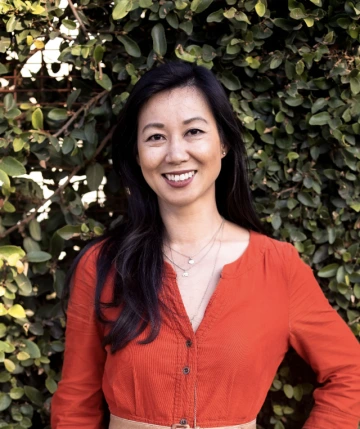
Cathery Yeh
Dr. Cathery Yeh has led Universal Design for Learning (UDL) implementation globally, working with educators in diverse settings, including urban, inclusive, self-contained special education, and dual-language classrooms. As an Associate Professor at the University of Texas at Austin, she examines how culturally responsive pedagogies and Universal Design for Learning can cultivate inclusive classrooms that embrace and leverage students’ multidimensional identities, specifically disability, class, gender, race, and language. Cathery served on the task force and as a writer for Catalyzing Change, the official policy document released by the National Council of Teachers of Mathematics (NCTM), which helped shape the revision of Math Frameworks across the country. She is also the author of Reimagining the Mathematics Classroom and Upper Elementary Mathematics Lessons to Explore, Understand, and Respond to Social Injustice, along with over 80 publications in research and practitioner journals on effective mathematics teaching. Her favorite place is the mathematics classroom, where she enjoys learning alongside teachers, students, and families.
Keynote Address for MEAD 2026: Belonging by Design: A Culturally Sustaining UDL Approach to Mathematics Education
How can we be responsive? Responsive to whom—and according to whom? This talk invites educators to reimagine mathematics teaching and learning through the lens of belonging and design. Together, we will confront pervasive myths and ideologies that shape mathematics education and center both student and teacher agency and resilience. Grounded in Culturally Sustaining Pedagogy (CSP) and Universal Design for Learning (UDL), this framework repositions responsiveness not as accommodation but as collective design—co-creating mathematics classrooms and schools where language, culture, and ways of knowing are recognized, sustained, and leveraged to deepen mathematical understanding and human connection.
Special thanks to the MEAD Steering Committee, AmeriCorps members, volunteers, local businesses, and our sponsors for making MEAD possible!

